The Holy Bible

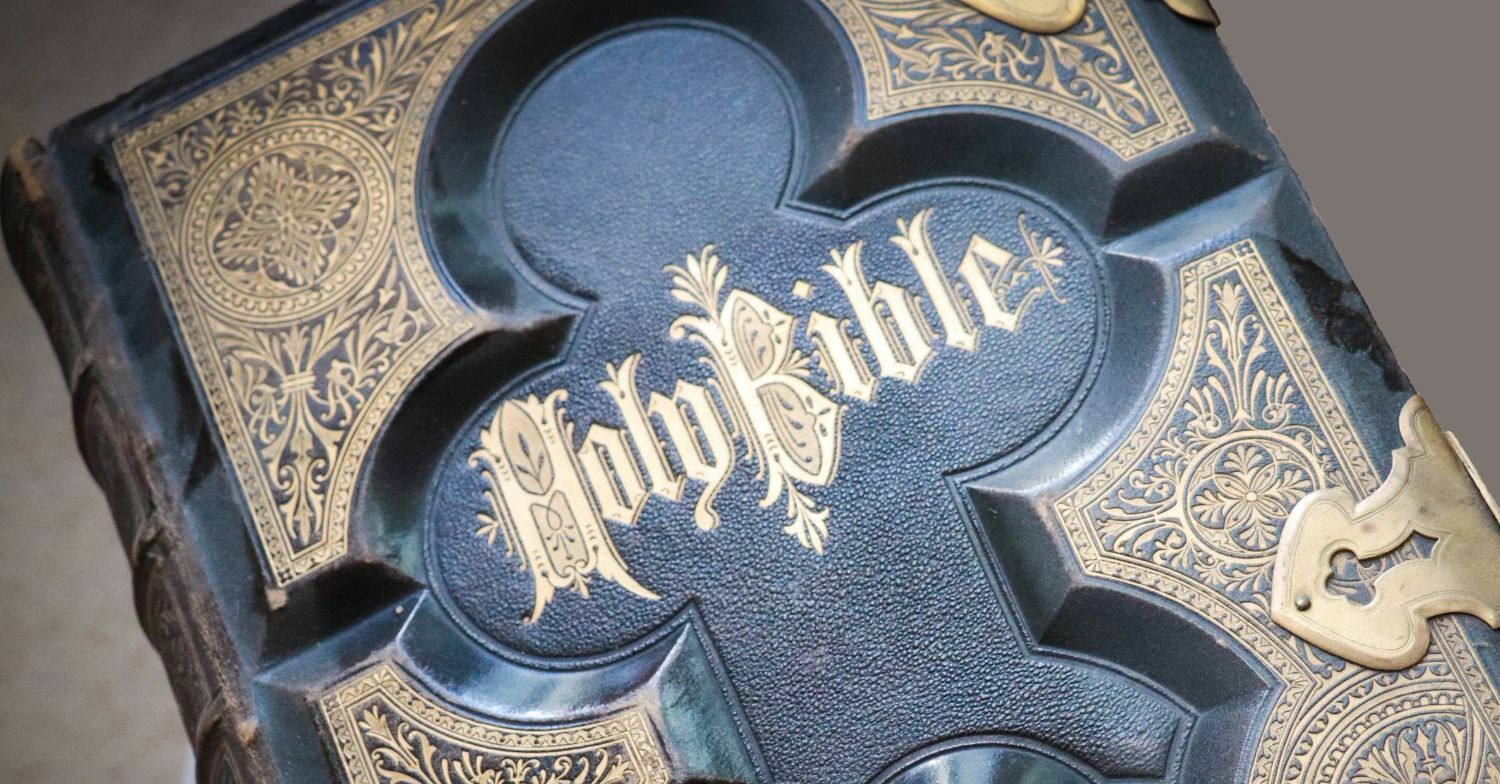
We assert that the Christian Bible is the final authority on all questions concerning God, that its author is God Himself and that God has promised to preserve and protect the integrity of the Bible until the end of time. As evidence of His careful oversight, we affirm that unlike any other book, it has been faithfully and verifiably handed down intact from generation to generation for thousands of years.
In 1947, ancient copies of Scripture called The Dead Sea Scrolls were discovered in the Holy land. The earliest of these documents dates back to 250 BC. Comparing these scrolls with today’s Bible provides convincing evidence that the integrity of the Bible has been faithfully maintained over the centuries.
We note also that the Bible is unique among books. It has been estimated that more than 5 billion copies have been printed, more than any other book in history. It is by far the best selling book of all time, outselling all secular titles by wide margins and doing so year after year. Typical Bible sales are between 100 and 150 million copies per year. This dwarfs all other bestsellers, which generally sell less than 1/10 of that number. A best-selling secular title may sell 5 to 10 million copies in one year before fading into obscurity. The Bible, on the other hand, has lasted for thousands of years and will never fade away.
In addition to being central to Christian living, the Holy Bible has had a massive, positive influence upon culture. For example, God and His Bible have inspired countless classical works of art and architectural masterpieces over the centuries. The paintings of Michelangelo and the music of Handel, Bach and others stand as lasting testimony, as do majestic cathedrals that would be nearly impossible to build today. It has been estimated that more than 100 million songs have been written over the years containing lyrics with at least one reference to the Scriptures.
There is no denying the impact, uniqueness, staying power and global reach of this book. Here we present this list of affirmations concerning The Holy Bible:
- The Bible gives us the entire history of the world, from the beginning of time (Creation) to the end of time (Judgment).
- Much of what is recorded in the Bible has already taken place and much is yet to take place.
- The Bible tells us how we came to be and what the purpose of life is.
- The Bible tells us how we are to live and gives us our moral code.
- The Bible gives us more specific information about whom God is and what His purposes are than can be learned from general revelation (see Affirmations 14: God’s Revelations).
- Although many human authors wrote it over many hundreds of years, every word in the Bible is the Word of God (“God breathed”).
- God the Holy Spirit worked through human authors to write the Bible.
- The Bible is not really one book but many books collected into one volume.
- A number of different literary styles are found in the Bible.
- Each literary style should be read as it was written (poetry as poetry, historical narrative as history, and so forth).
- The Bible is about real people who lived and died in real places.
- Biblical accounts are presented in historically accurate settings.
- Although parts of the Bible are highly symbolic, there is nothing mythical or imagined about the Bible.
- The historical narratives found in the Bible are identifiable as such and should be read literally, not figuratively or symbolically.
- Parts of the Bible are highly symbolic and must be read as such. Some of these passages are very difficult to understand.
- There are well-established and reliable rules for properly understanding the Bible, such as using the didactic (teaching) portions of Scripture to interpret the meaning of the historical narratives.
- The Bible is its own interpreter, with one passage often clarified by another.
- If one passage of Scripture appears to contradict another it is a sure sign that the reader has misinterpreted one or both.
- One uses Scripture to interpret other Scripture.
- The Scriptures should be read with the historical context of the times in which they were written in mind.
- The Scriptures should be read with an understanding of how language was used at the time they were written.
- A passage of Scripture should first be analyzed to reveal what it was meant to convey to a reader who lived at the time it was written.
- After the original meaning of a Scripture to an ancient reader is understood, then it may be analyzed to determine its application to a modern reader.
- God the Holy Spirit moved the human authors of the Bible to set down God’s message to us precisely.
- It was the Scriptures themselves that were inspired, not the authors.
- The words of the Bible are God’s own words recorded by men, but they were not dictated.
- The words of the Bible were set down in the writing style of the authors, yet free of human error.
- Each and every word in the Bible is important.
- In its original languages, the Bible is completely free of all error and internal contradiction.
- There are flaws in translations of the Bible.
- The seriousness of the flaws in a translation varies from one translation of the Bible to the next.
- It is important to select a reliable translation for Bible study.
- Apparent contradictions in the Bible are due to misinterpretation or misunderstanding.
- The historical accounts found in the Bible are true and accurate.
- There are numerous proofs that the Bible is true.
- Proofs are found within the Bible (fulfilled prophesy) and outside of the Bible (verification through archeology, historical records and secular writings).
- God has preserved the Bible intact for thousands of years and He will protect it from corruption until The End Of Time.
- The Bible is completely consistent, cover-to-cover.
- The Bible tells us everything we need to know about how we should live our lives on earth, how we should worship God and how we can please Him.
- The Bible is the sole authority given to us by God for instruction in truth and its application to our lives.
- The Bible is sufficient for instruction in truth and its application.
- No church has authority that equals or exceeds the authority of the Bible.
- The authority of the Bible is superior to the authority of any church.
- No church has authority over the Bible.
- Christian commentaries (other books written about the Bible), confessions and creeds (statements of belief) and other Christian writings may be helpful in understanding Scripture, but they are completely subordinate to it.
- No pastor, priest, church, church counsel or church tradition may add anything to or take anything away from what is found in the Bible.
- Any church edict or tradition that adds to what God has set forth in the Bible is invented by men and is not from God.
- The Bible is unique, the only book in the world that contains instruction for us directly from the mouth of God.
- Following God’s rules for living generally produces good results and happiness.
- Violating God’s rules for living generally produces bad results and unhappiness.
- The books comprising the Bible (the canon) were acknowledged (received) by the early church as the genuine Word of God.
- The church recognized books for inclusion in the canon that were already in general use and widely accepted by Christians as genuine.
- The early church played no part in creating the Scriptures, but it did reject (exclude from the canon of the Bible) some clearly counterfeit books that were not inspired by God.
- There are approximately 14 books called apocryphal books (Apocrypha) that were contested within the early church.
- The apocryphal books were of doubtful origin and authority.
- The Apocrypha pre-dated the New Testament writings.
- The Apocrypha were not included in the Hebrew Bible (the Old Testament).
- Acceptance by the early church of the Apocrypha was not universal.
- The Jews challenged the canonicity of the Apocrypha sometime after 100 A.D.
- The Council of Rome (382 A.D.) included some but not all of the apocryphal books in the canon.
- The New Testament never directly quotes any passages from the Apocrypha.
- The Roman Catholic Douay-Rheims version of the Bible was translated from the Latin Vulgate and published in 1582 (the Old Testament) and 1609 (the New Testament).
- The Protestant King James version of the Bible was translated from the original Hebrew and Greek and published in 1611.
- The New Testament books of the Douay-Rheims and King James translations are the same in title and number.
- The Old Testament books of the Douay-Rheims translation include seven of the apocryphal books in addition to the books that appear in the King James Bible.
- The Protestant King James Bible contains a total of 66 books, 39 in the Old Testament and 27 in the New Testament, while the Catholic Douay-Rheims Bible contains a total of 73 books, 46 in the Old Testament and 27 in the New Testament.
- Protestants generally do not recognize the apocryphal books as genuine Scripture (inspired by God; authentic parts of the Bible).
- Apart from the apocryphal books, there is substantial agreement between the Catholic and Protestant translations of Scripture.
- The church cannot take credit for giving us the Bible. The Bible was created by God through men and given by God to the church.
- The church can take credit for being used by God to collect the books of the Bible and to protect the Bible from corruption through the ages.
- God used the church throughout the ages to preserve the Bible, but the Bible is neither a creation of the church nor is it subject to change by the church.
- No church is the sole interpreter of the Bible.
- Churches, pastors and priests are fallible and have occasionally misinterpreted the Bible. Only God is incapable of error.
- Men should not blindly accept church doctrine without reconciling it with biblical doctrine. Scripture is the final authority.
- Individual men can understand the Word of God by their own reading with the help of the Holy Spirit and should strive to do so.
- Individual men have the right to interpret the Bible on their own, but no man has the right to deliberately misinterpret the Bible.
- Biblical references to “the mouth of God,” “the hand of God” and so forth are to make the Bible easier for humans to understand.
- Language that describes God in terms that apply to the human body is called anthropomorphic language.
- Anthropomorphic language does not describe actual attributes of God the Father, who is a spirit being.
- Anthropomorphic language is used to make God easier for us to understand.
- The original languages of the Bible are Hebrew (Old Testament), Greek (New Testament) and to a lesser degree, Aramaic.
- Scholars and theologians go back to the original languages to study subtle shades of meaning in the Bible.
- Lay people unschooled in Hebrew, Greek and Aramaic cannot analyze the original language of the Bible for themselves.
- Ordinary people must be cautions when trusting scholars and theologians to explain the meaning of difficult passages in the Scriptures.
- Older translations, like the 1611 King James Version (KJV), are very reliable, even though their archaic language may be awkward and difficult to understand in places.
- There are some awkward passages in the KJV, but the original meanings have been preserved nevertheless.
- Notes included in some Bibles by editors as aids to understanding can be helpful, particularly if they include cross-references to other parts of the Scriptures.
- The notes included in some Bibles should be used cautiously, as they are the thoughts of men and not the Word of God.
- Some newer translations, particularly those that make the Bible easy to read by paraphrasing or “modernizing” the original text, are unreliable and should never be used.
- It is good to memorize passages from the Bible.
- Among other things, memorizing parts of the Bible helps to keep God in our thoughts.
- Popular passages from the Bible include The Lord’s Prayer, the 23rd Psalm and The Ten Commandments.